
Polar Frost quartz sits in a subtle design zone. It appears white at first glance, yet it carries a cooler undertone that quietly reacts to everything around it. Lighting, cabinetry, and finishes all influence how it reads once installed.
Because of that, cabinet color choices tend to matter more with Polar Frost quartz than with warmer or more dramatic quartz styles. The goal isn’t to limit options — it’s to choose pairings that help the surface look intentional and balanced over time.
Why Cabinet Color Matters with Polar Frost Quartz
Polar Frost reflects light more than most people expect. That reflection means cabinet color doesn’t just sit beside the quartz — it actively shapes how the surface appears throughout the day.
In well-balanced spaces, Polar Frost feels clean, modern, and calm. In less considered pairings, it can feel flat or overly cool. Understanding that relationship makes the design process much smoother.
Soft Greys: Clean Without Feeling Cold
Soft grey cabinetry is one of the most consistent pairings with Polar Frost quartz. Greys that carry a hint of warmth help reinforce the clean look while avoiding a clinical feel.
These tones work especially well in kitchens that already receive good natural light. They create visual continuity without making the space feel sterile, which is often a concern with cooler quartz surfaces.
The key is restraint — lighter greys with subtle warmth tend to feel more livable than darker, blue-based greys.
Light Wood Cabinets: Adding Balance and Depth
Light wood cabinetry pairs naturally with Polar Frost quartz by introducing warmth and texture. This contrast helps the quartz feel grounded rather than stark.
Wood tones soften the overall look and prevent the space from feeling overly polished or flat. This pairing works well in both modern and transitional kitchens, especially when the goal is a welcoming, everyday feel.
Natural finishes often age gracefully alongside Polar Frost, making this a popular long-term choice.
White Cabinets: Clean but Worth Considering Carefully
White cabinets can work with Polar Frost quartz, though this pairing benefits from added depth. When both surfaces aim to be the “whitest white,” the space can sometimes feel unfinished or visually thin.
If white cabinets are part of the vision, introducing variation through cabinet texture, sheen, or hardware can help. Matte finishes, subtle detailing, or warmer lighting all add dimension and keep the kitchen from feeling flat.
This approach maintains a clean aesthetic while giving the quartz room to stand out.
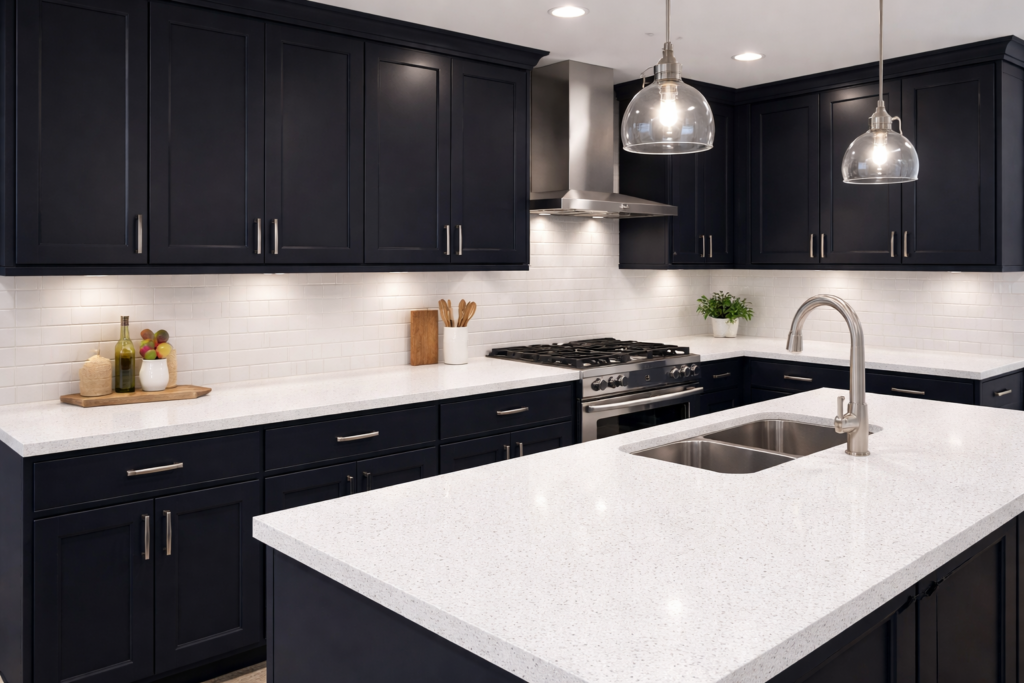
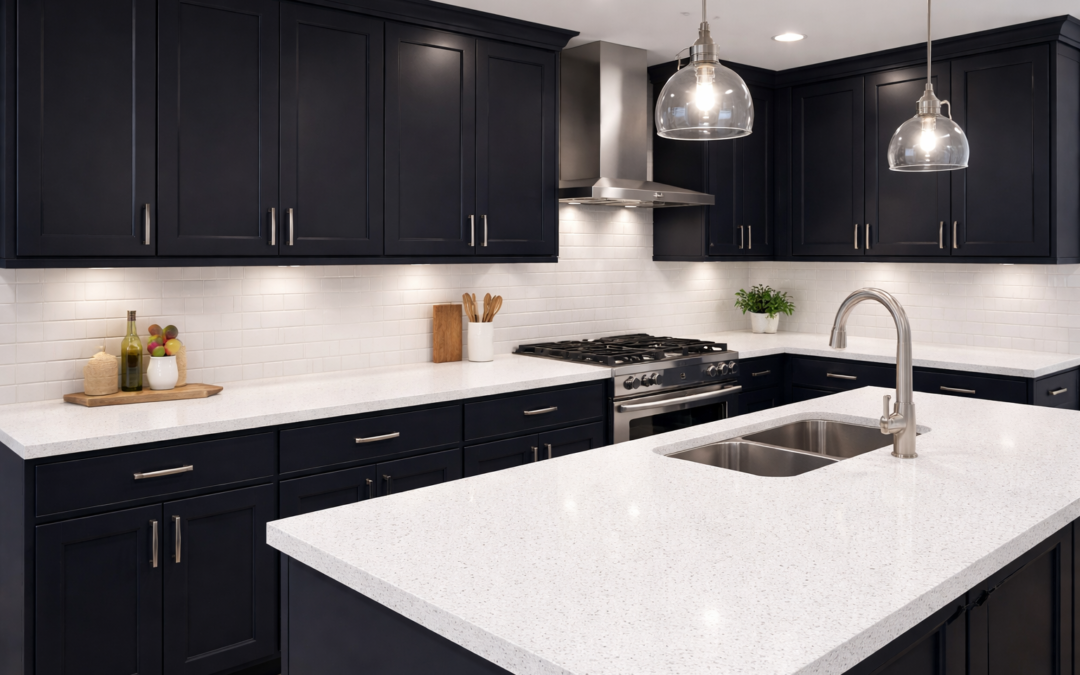
Dark Cabinets: Successful with the Right Lighting
Dark cabinetry can create a striking contrast with Polar Frost quartz when lighting is thoughtfully planned. Natural light, layered fixtures, and under-cabinet lighting help keep the quartz from appearing too cool or severe.
In darker spaces without sufficient light, Polar Frost can lean colder than intended. When lighting is addressed early in the design process, this pairing can feel dramatic and refined rather than heavy.
Designing with Intention
Polar Frost quartz responds to its surroundings more than many surfaces. Thoughtful contrast, balanced lighting, and material variation allow it to feel crisp without becoming cold.
Rather than limiting choices, this quartz rewards intentional ones. When cabinets, lighting, and finishes work together, Polar Frost delivers a clean, modern look that remains comfortable and timeless.
See Polar Frost Quartz in Person
Quartz surfaces always reveal more in person than on a screen. Seeing Polar Frost under real lighting, alongside cabinet samples and finishes, makes decision-making far more confident.
For homeowners exploring Lethbridge Countertops or Penticton Countertops, visiting a showroom offers clarity that photos alone can’t provide. Granite Rocks is among the stone countertop suppliers serving both locations, with showrooms where quartz options can be viewed up close.
You’re welcome to set up a quote or visit the Granite Rocks showroom in Lethbridge or Penticton to see how Polar Frost quartz interacts with different cabinet styles and lighting conditions.
That final step often turns uncertainty into certainty — and leads to a finished space that feels just right.