

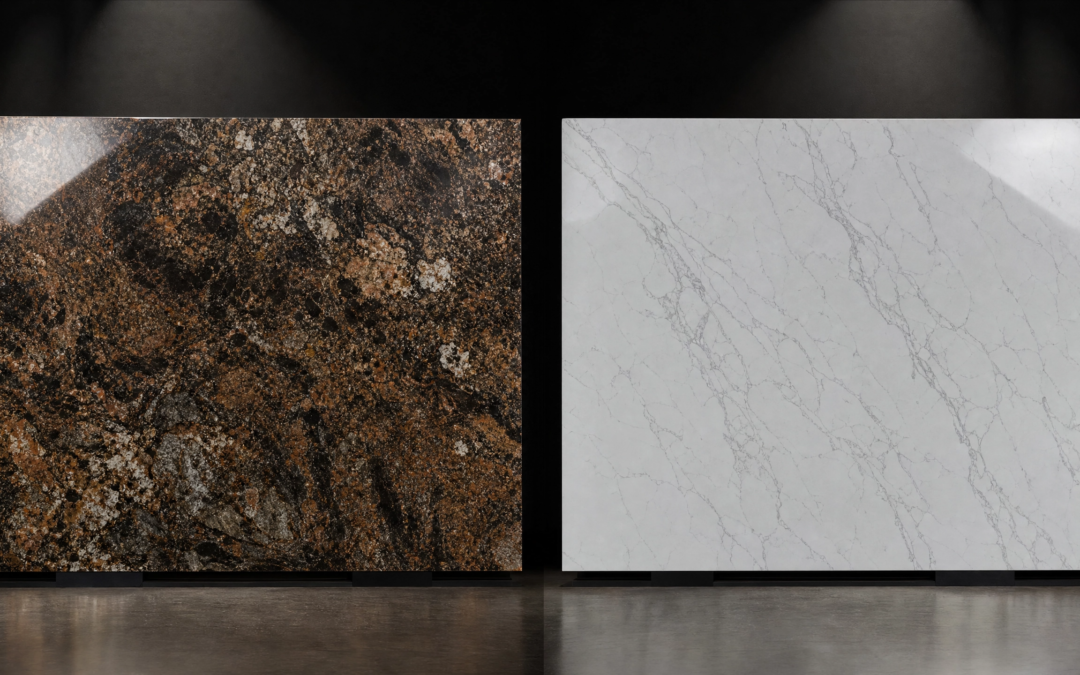
When planning a kitchen renovation, choosing the right surface material is one of the most important decisions you will make. For most homeowners, the choice ultimately comes down to two premium options: quartz vs granite countertops.
Both materials offer exceptional beauty and add significant value to your home, but they have distinct differences in how they are made, how they look, and how they need to be maintained. At Granite Rocks, we fabricate and install both materials across Lethbridge and Penticton. Here is our comprehensive guide to help you decide which surface is right for your lifestyle.
Granite: The Beauty of Natural Stone
Granite is a 100% natural stone, quarried directly from the earth, cut into slabs, and polished to a high shine.
The Pros of Granite:
- Unique Aesthetics: Because it is a natural product, no two slabs of granite are exactly alike. Your countertop will feature unique veining, mineral deposits, and color variations that cannot be perfectly replicated.
- Heat Resistance: Granite is incredibly heat resistant. You can generally place hot pots and pans directly on the surface without fear of damage or discoloration.
- Outdoor Durability: Granite can withstand the elements, making it an excellent choice for outdoor kitchens and BBQ areas.
The Cons of Granite:
- Maintenance: Granite is naturally porous. To prevent stains and bacterial growth, it must be sealed upon installation and resealed periodically (usually once a year).
- Inconsistency: If you prefer a uniform, predictable pattern, the natural variations in granite might not suit your design vision.
Quartz: Engineered Perfection
Quartz countertops are engineered surfaces, created by combining roughly 90% crushed natural quartz with 10% polymer resins and pigments.
The Pros of Quartz:
- Zero Maintenance: The resin binders make quartz completely non-porous. It never needs to be sealed, and it is highly resistant to stains from wine, coffee, and oils.
- Design Consistency: Because it is manufactured, quartz offers a uniform pattern and color. It can also be engineered to mimic the look of high-end marble without the fragility.
- Durability: Quartz is slightly harder than granite and is highly resistant to chipping and scratching.
The Cons of Quartz:
- Heat Sensitivity: The resins used in quartz can melt or discolor if exposed to extreme heat. You must always use trivets or hot pads under hot cookware.
- Indoor Use Only: Prolonged exposure to direct sunlight and UV rays can cause the pigments in quartz to fade over time, meaning it is not suitable for outdoor applications.
Making Your Decision
If you want a truly unique, natural piece of earth in your kitchen and don’t mind occasional sealing, granite is a spectacular choice. However, if you prefer a flawless, maintenance-free surface that can handle the spills of a busy household, engineered quartz is likely the better investment.
Still unsure? The best way to decide is to see and feel the materials in person. We carry extensive selections of both natural granite and premium quartz brands like Caesarstone, HanStone, and Silestone.
Visit our showrooms to explore your options. Learn more about our Lethbridge Countertop Services or our Penticton Countertop Services, and let our experts help you find the perfect stone for your home.